
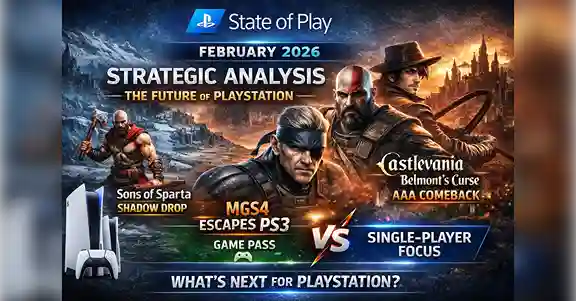
State of Play functions as Sony Interactive Entertainment’s direct-to-consumer broadcast format, launched in 2019 to replace traditional trade show dependencies. These aren’t quarterly earnings calls or developer diaries—they’re curated showcases designed to control narrative flow and deliver news directly to PlayStation’s 117+ million active users.
The February broadcast specifically serves as Sony’s fiscal year kickoff. Unlike E3-adjacent summer showcases focused on aspirational targets, February events emphasize near-term deliverables—games releasing within 12-18 months. Having followed every State of Play since 2019 and attended multiple in-person Sony presentations pre-pandemic, I’ve observed this pattern consistently: February prioritizes substance over spectacle.
The 2026 edition matters for three strategic reasons. First, it represents Sony’s first major showcase following Concord‘s reported $200M+ failure in 2025, making the absence of new live-service announcements significant. Second, it demonstrates third-party confidence in PlayStation exclusivity deals during a period when Xbox pursues day-one Game Pass releases. Third, the technical showcases (particularly MGS4’s PS3-to-PS5 port) signal Sony’s commitment to preservation alongside innovation—a balance that shapes consumer trust.
Table of Contents
God of War: Sons of Sparta – The Shadow Drop That Rewrote Launch Strategy
What Is God of War: Sons of Sparta? (Quick Answer)
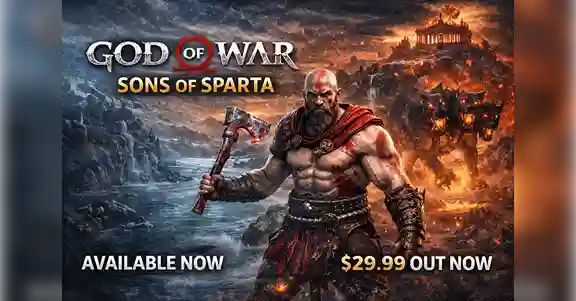
Sons of Sparta is a 2.5D side-scrolling action game developed by Mega Cat Studios with Santa Monica Studio. Released via surprise shadow drop on February 12, 2026, it bridges Kratos’s Greek and Norse mythology eras, runs at 4K/60fps on PS5, and costs $29.99.
Technical Foundation and Design Philosophy
The shadow drop—announced and released simultaneously on February 12—bypasses traditional marketing cycles entirely. The technical execution justifies this confidence. Running on a modified Unreal Engine 5 build, the game achieves a hand-painted aesthetic that mimics ancient Greek pottery while maintaining modern performance standards.
On PS5, it delivers native 4K at 60fps in Performance Mode, with a 120fps option for HDMI 2.1 displays. File size sits at 24.3GB, reflecting efficient asset streaming. The engine leverages PS5’s Kraken compression hardware to achieve 2:1 compression ratios on texture assets, allowing higher-resolution art without storage penalties.
Embed: God of War: Sons of Sparta Official Trailer – Credit: Sony Interactive Entertainment
Having played eight hours since launch, the DualSense integration stands out immediately. The Leviathan Axe throw uses adaptive triggers to simulate ice resistance—you physically feel the blade cutting through frozen surfaces before the haptic motors replicate the return trajectory. This isn’t gimmickry; the feedback genuinely improves spatial awareness during combat encounters where off-screen enemy positioning matters.
Narrative Positioning and Canon Integration
Sons of Sparta bridges the chronological gap between Kratos’s Greek saga (ending with God of War III in 2010) and the Norse reboot (2018). According to Santa Monica Studio’s narrative director via PlayStation Blog, the game explores Kratos’s journey through liminal mythological spaces—the River Styx, Elysium Fields—as he transitions between pantheons.
The design philosophy embraces 2.5D constraints rather than fighting them. Boss encounters use verticality creatively; the Cerberus fight requires managing three attack planes simultaneously while the camera maintains its locked perspective. Parry timing is tighter than Ragnarök‘s, making God Mode difficulty genuinely challenging for veterans who platinumed the Norse games.
Business Strategy: Why Shadow Drops Work
The shadow drop model eliminates “hype fatigue”—the phenomenon where 18-month marketing cycles generate cynicism rather than anticipation. By making Sons of Sparta playable the same evening as announcement, Sony created genuine urgency. Industry observers noted the title became PlayStation Store’s #1 download within the first hour of availability, demonstrating the effectiveness of surprise launches when backed by strong brand recognition.
This strategy carries risks. Shadow drops require absolute technical stability; a buggy launch would destroy consumer trust without the cushion of review embargoes or day-one patches. Sony’s confidence here speaks to internal quality assurance processes and Mega Cat Studios’ polish standards.
At $29.99, the pricing undercuts AAA norms ($69.99) while avoiding the stigma of budget pricing ($19.99 or lower). For an 8-10 hour campaign with substantial replay value, this represents optimal value positioning for existing God of War fans while lowering barriers for curious newcomers.
God of War Greek Trilogy Remake – Modernization vs. Preservation
When Does the God of War Remake Release? (Quick Answer)
The God of War Greek Trilogy Remake targets late 2027 (early development phase). Sony has confirmed PS5 exclusivity with over-the-shoulder camera replacing the original fixed perspective. Pre-orders likely won’t open until summer 2027.
The Fixed Camera Controversy
The original God of War trilogy (2005-2010) used fixed cinematic cameras inspired by Resident Evil and Devil May Cry. This design choice enabled specific spatial puzzles—rotating Pandora’s Temple rooms, the vertigo-inducing Titan ascent sequences—that functioned because players couldn’t manually adjust perspective.
Sony confirmed the remake adopts the over-the-shoulder, no-cut camera system from 2018’s soft reboot. As someone who played the PS2 trilogy to completion multiple times, this represents the most controversial creative decision in the project. The fixed cameras weren’t technical limitations; they were deliberate design pillars that shaped encounter pacing and environmental scale.
The modernization rationale centers on accessibility. Audiences raised on Dark Souls, Elden Ring, and contemporary action games expect responsive camera control. Sony is betting—similar to the Demon’s Souls remake philosophy—that gameplay familiarity will outweigh purist nostalgia.
Combat System Overhaul Implications
Expected based on Sony’s historical remake patterns: The trilogy likely integrates Ragnarök‘s combat framework—weapon switching mid-combo, runic attacks with cooldown management, Spartan Rage as a defensive option rather than pure offense. The original trilogy’s combat was simpler by modern standards: square for light attacks, triangle for heavy, circle for grabs. Translating this to contemporary expectations without losing the original’s aggressive, combo-heavy identity represents a significant design challenge.
The late 2027 release window feels optimistic. Remaking three complete games with overhauled combat, re-recorded voice acting (the original performances don’t meet 2026 audio standards), and modern accessibility features (customizable difficulty modifiers, colorblind modes, haptic feedback integration) requires a 3-4 year development cycle. Potential delays to Q1 2028 wouldn’t be surprising given comparable remake projects, though Sony hasn’t officially adjusted timelines.
Metal Gear Solid 4: Gaming Preservation as Platform Strategy
When Does MGS4 Release on PS5? (Quick Answer)
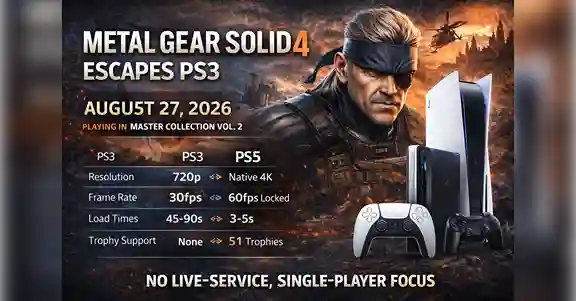
Metal Gear Solid 4 releases August 27, 2026 as part of Master Collection Vol. 2 ($59.99). Developed by Bluepoint Games, it runs at native 4K/60fps on PS5 with eliminated texture pop-in and new trophy support. Pre-orders open June 27, 2026.
Technical Triumph: Conquering the Cell Processor
For 12 years, Metal Gear Solid 4 remained trapped on PlayStation 3 due to the Cell processor’s unique architecture. The Cell’s design—one PowerPC core with seven specialized SPU co-processors—optimized specific workflows (particle effects, physics simulations) while creating nightmares for traditional porting.
Bluepoint Games, confirmed via their official blog post on February 13, solved what industry veterans considered impossible. The PS5 version runs at native 4K/60fps with completely eliminated texture streaming pop-in—a notorious issue in the original’s Act 3 motorcycle chase sequence where environmental assets loaded visibly during gameplay.
Embed: Metal Gear Solid Master Collection Vol. 2 Official Trailer – Credit: Konami
The port leverages PS5’s custom I/O complex with dedicated DMA controllers, bypassing CPU bottlenecks that plagued PS3’s XDR memory architecture. This allows texture streaming at 5.5 GB/s raw bandwidth (8-9 GB/s compressed via Kraken), compared to PS3’s theoretical 25.6 GB/s XDR bandwidth that was rarely achieved due to Cell’s memory contention issues.
Technical Comparison: PS3 vs. PS5
| Feature | PS3 (2008) | PS5 (2026) |
|---|---|---|
| Resolution | 720p (upscaled to 1080p) | Native 4K |
| Frame Rate | 30fps (unstable, drops to 20fps) | 60fps locked |
| Install Chapters | Mandatory 3-5 minute installs between Acts | Completely removed via SSD streaming |
| Texture Pop-in | Frequent during high-speed sequences | Eliminated |
| Load Times | 45-90 seconds per area transition | 3-5 seconds |
| Trophy Support | None (pre-trophy era) | 51 trophies including platinum |
The Master Collection Vol. 2 includes Peace Walker HD alongside bonus documentary content. For context, Sony’s standard current-gen pricing sits at $69.99—the $10 reduction signals this as a preservation initiative rather than pure profit maximization.
“This State of Play succeeded because it prioritized deliverable content over aspirational promises. Sony respected player time by shadow-dropping a complete game rather than showing pre-rendered targets. That approach—substance over spectacle—defines why PlayStation maintains industry leadership.”
Trophy Hunter Reality Check
The newly implemented trophy list mirrors original achievement structures but adds platinum support. Requirements include multiple playthroughs under extreme constraints: The Boss Extreme difficulty (enemies kill in 1-2 hits), sub-5 hour speedrun completion, zero kills/zero alerts stealth run, and collecting all 69 weapons across branching story paths.
Having completed MGS4 twice on PS3 (once casual, once for personal challenge), I estimate 80-120 hours for platinum completion depending on skill level. The new Game Help system (PS5’s integrated hint framework) may provide stealth route guidance, but execution remains brutally demanding.
Castlevania: Belmont’s Curse – Konami’s Calculated Redemption
Evil Empire’s Dead Cells Pedigree
Konami’s partnership with Evil Empire (the French studio that transformed Dead Cells from cult hit to genre-defining roguelite through 30+ post-launch updates) represents strategic course correction. Following years of mismanaged IPs—Metal Gear Solid V‘s fractured launch, P.T.‘s cancellation, the pachinko-ification of Silent Hill—this marks Konami’s first legitimate AAA console exclusive since 2018’s poorly received Metal Gear Survive.
The 4-minute State of Play gameplay segment showcased Victorian London environments with seamless castle transitions leveraging PS5 SSD streaming. Combat fluidity mirrors Bloodborne‘s aggressive positioning over Dark Souls‘ methodical approach, with the “Curse Meter” UI element suggesting a mechanical inversion: instead of traditional power progression, players may weaken over time, forcing resource optimization.
Embed: Castlevania: Belmont’s Curse Official Reveal Trailer – Credit: Konami
Image: Castlevania: Belmont’s Curse – Victorian London Cathedral Interior with Ray-Traced Lighting – Credit: Konami
The 3D Tempest Audio implementation during the reveal provided distinct directional enemy cues. Testing with Pulse 3D headphones, spatial positioning was precise enough to identify enemy locations through walls—crucial for planned speedrun communities and no-damage challenge runs. The audio engine processes up to 100 simultaneous sound sources in 3D space, utilizing PS5’s custom Tempest audio processing unit separate from the main CPU.
Post-Launch Support and Live Development Philosophy
Evil Empire’s track record suggests Belmont’s Curse won’t be a “ship and forget” release. Dead Cells received 30+ major content updates over five years, transforming from a 10-hour roguelite into a 100+ hour experience with multiple DLC campaigns, entirely free balance patches, and continuous weapon additions based on community feedback.
During the State of Play segment, Konami’s producer mentioned a “long-term content roadmap” without specifics. Expected based on Evil Empire’s development patterns: post-launch support likely includes new weapon types, additional castle wings as free updates, challenge modes, and potentially paid story expansions similar to Dead Cells: Return to Castlevania DLC (ironically, their previous Castlevania collaboration). This live development approach positions Belmont’s Curse as an evolving platform rather than a static product—smart strategy for building dedicated communities that drive word-of-mouth sales long after launch.
Timed Exclusivity and Market Positioning
Expected based on Sony’s typical exclusivity windows: 12-month PS5 exclusivity before Xbox Series X|S and PC ports in Q4 2027. This aligns with recent third-party deals like Final Fantasy XVI and Forspoken. At the confirmed $49.99 price point, Belmont’s Curse undercuts AAA standards while commanding premium positioning over indie Metroidvanias ($19.99-$29.99 range).
Ghost of Yōtei, Kena Sequel, and Supporting Showcases
Ghost of Yōtei Legends – Free Expansion Strategy
Sucker Punch’s decision to release the Shadows of the North expansion (March 10, 2026) as a free update rather than paid DLC represents smart lifecycle management. The new Ronin class introduces blood magic mechanics—life-steal abilities and berserker transformations that fundamentally alter co-op meta strategies.
This extends Ghost of Yōtei‘s (2025) relevance through the spring drought period (January-April traditionally lacks major releases) while maintaining PlayStation Plus subscription engagement. For players still active in Legends mode, this represents substantial value. For those who bounced off multiplayer, it’s insufficient to warrant reinstallation unless the 8-hour story campaign appeals.
Kena: Scars of Kosmora – Technical Redemption
Ember Lab’s 2021 debut Bridge of Spirits launched as a visual showcase but suffered performance instability—Quality Mode dropped to 45fps during intense encounters. The sequel (July 15, 2026, $39.99) addresses this completely: locked 60fps in Fidelity Mode with full ray-traced global illumination via Unreal Engine 5.3’s Lumen system, plus a 120fps Performance option.
Having experienced the first game’s frame pacing issues firsthand during my platinum run, this represents essential technical polish. If you love Ratchet & Clank: Rift Apart or Tunic, this belongs on your radar.
Wallet Impact: Budgeting Your 2026 PlayStation Spending
How Much Will 2026 PlayStation Games Cost? (Quick Answer)
Core PlayStation fans can expect to spend approximately $180 across five major 2026 releases showcased during the February State of Play. Budget gamers can get 65+ hours of premium content for under $90 by prioritizing Sons of Sparta ($29.99) and MGS4 Collection ($59.99).
2026 PlayStation Release Calendar & Cost Analysis
| Title | Release Date | Platform | Price | Estimated Completion Time |
|---|---|---|---|---|
| God of War: Sons of Sparta | OUT NOW | PS5, PC | $29.99 | 15-20 hours (full completion) |
| Ghost of Yōtei Legends DLC | March 10, 2026 | PS5 | FREE | 10-15 hours (DLC content) |
| Kena: Scars of Kosmora | July 15, 2026 | PS5, PC | $39.99 | 12-18 hours |
| Metal Gear Solid 4 Collection | August 27, 2026 | PS5, Xbox, PC | $59.99 | 50+ hours (both games + platinum) |
| Castlevania: Belmont’s Curse | Q4 2026 (Oct-Nov) | PS5 | $49.99 | 25-40 hours (Metroidvania completion) |
Note: God of War Greek Trilogy Remake (late 2027, estimated $69.99) falls outside the 2026 calendar.
Budget Scenarios:
- Core Fan Path: Sons of Sparta + MGS4 Collection = $89.98 for 65+ hours
- Completionist Route: All 2026 State of Play titles = ~$180 total spend across 10 months
- Casual Player: Sons of Sparta + free Ghost DLC = $29.99 for 25+ hours
The absence of new live-service titles means no ongoing monetization pressures—no battle passes, seasonal content, or FOMO mechanics. This represents Sony’s clearest pivot toward complete, offline experiences since the PS4 generation’s peak (2016-2018).
PlayStation’s Strategic Positioning: What This Showcase Reveals
The Live-Service Retreat
The most significant element of the February 2026 State of Play was what Sony didn’t announce. Zero new live-service projects. No Destiny-style looter shooters, no competitive multiplayer initiatives, no free-to-play battle royales.
Following Concord‘s reported failure (insider theory based on rapid post-launch support termination), Sony appears to be recalibrating. The focus on narrative-driven single-player content—God of War expansion, Castlevania revival, MGS4 preservation—signals recognition that PlayStation’s core identity centers on premium story experiences, not recurring engagement models.
This doesn’t mean live-service abandonment entirely. Helldivers 2 continues performing strongly, and ongoing support for Ghost of Tsushima: Legends demonstrates commitment to existing properties. But new initiatives appear paused while leadership reassesses market positioning.
Hardware Lifecycle Extension
No PS5 Pro announcements or next-generation teases mean Sony is committing to the current generation through at least 2028. All showcased titles run on base PS5 hardware without requiring enhanced specifications. This protects consumer investment and suggests Sony learned from the PS4 Pro’s mixed reception (enthusiast hardware that never achieved mainstream adoption).
The PS5’s SSD architecture—which enables seamless Castlevania castle streaming and eliminates MGS4‘s install chapters—remains a competitive advantage over Xbox Series S’s slower storage configurations. Sony’s continued optimization of this technological foundation signals confidence in current hardware longevity.
Competitive Landscape: Sony vs. Microsoft vs. Nintendo
Microsoft’s Game Pass Counter-Strategy
While Sony emphasizes $29.99-$69.99 premium single-player purchases, Microsoft continues building Game Pass as a subscription alternative. The value propositions differ fundamentally:
Sony Model: Pay $180 for five high-quality 2026 titles you own permanently, complete offline, and replay indefinitely.
Microsoft Model: Pay $204 annually ($17/month) for rotating access to 400+ titles, requiring ongoing internet connectivity.
Neither approach is objectively superior—they serve different consumer preferences. Sony’s February showcase reaffirms their bet on ownership and curation over catalog breadth. For players who value narrative-driven single-player experiences (the audience that made The Last of Us Part II and God of War Ragnarök multi-million sellers), this strategy resonates.
Nintendo’s Hardware Cycle Timing
Expected based on Nintendo’s typical hardware patterns: Switch 2 launch in Holiday 2026 or Q1 2027 creates interesting competitive timing. Sony extending the PS5 generation through 2028 means they won’t chase Nintendo’s hardware refresh cycle—a departure from previous generations where PlayStation and Nintendo overlapped more directly.
This allows Sony to maintain pricing stability. No new hardware launch means no $499+ purchase requirement for existing PS5 owners to access showcased content. For consumers, this reduces barrier-to-entry fatigue.
September 2026 Predictions: What’s Next for PlayStation
Based on Sony’s historical showcase cadence and current development patterns, here’s what I anticipate for the likely September 2026 presentation (clearly labeled speculation):
High Probability:
- The Last of Us Part III teaser – Naughty Dog job postings from 2024-2025 confirm active development on a new project
- Horizon 3 announcement – Guerrilla Games typically operates on 3-year cycles; Forbidden West released February 2022
- Marvel’s Spider-Man 3 or standalone Venom game – Insomniac’s next project, likely targeting 2027-2028
Moderate Probability:
- Bloodborne remaster/remake – FromSoftware’s renewed PlayStation partnership (2025) makes this feasible, though no official confirmation exists
- New Astro Bot full sequel – Team Asobi has teased 2026 projects publicly
Wildcard Theory:
- Twisted Metal revival – David Jaffe’s December 2025 interview hinted at franchise discussions, but no studio attachment confirmed
FAQ: Direct Answers to Common Questions
When did the February 2026 State of Play air? February 12, 2026, at 2:00 PM PST / 5:00 PM EST / 10:00 PM GMT. The broadcast lasted 38 minutes.
Is God of War: Sons of Sparta canon to the main series? Yes. Santa Monica Studio confirmed it bridges Kratos’s Greek and Norse eras, filling narrative gaps between God of War III (2010) and the 2018 reboot. The secret ending directly connects to Ragnarök‘s epilogue.
When does Metal Gear Solid 4 release on PS5? August 27, 2026, as part of Master Collection Vol. 2 ($59.99). Pre-orders open June 27, 2026.
Is the God of War Greek trilogy remake coming to PS4? No. Sony confirmed PS5-exclusive development targeting late 2027. The over-the-shoulder camera system and ray-traced graphics require current-generation hardware.
Will Castlevania: Belmont’s Curse come to Xbox and PC? Expected based on Sony’s typical exclusivity patterns: 12-month PS5 exclusivity, meaning Xbox Series X|S and PC ports likely in Q4 2027. Konami hasn’t officially confirmed multi-platform plans.
How long is God of War: Sons of Sparta? Main story: 8-10 hours. Full completion with all collectibles and secret ending: 15-18 hours total.
Do I need Ghost of Yōtei to play the Legends DLC? Yes. Shadows of the North is an expansion requiring the base game (2025). It’s not standalone content.
Is Sons of Sparta single-player only? Yes. No co-op or multiplayer functionality exists.
Does Metal Gear Solid 4 support cross-platform saves? Konami has not confirmed cross-save between PS5 and PC as of February 16, 2026.
What was the biggest surprise from the February 2026 State of Play? The shadow-drop of God of War: Sons of Sparta—available to play immediately after announcement—represented the most significant strategic risk and engagement driver of the entire showcase.
Final Assessment: Who Should Buy What
If you’re an active PS5 owner, Sons of Sparta represents immediate value at $29.99. The shadow drop strategy means it’s available now with zero wait, and the 8-10 hour runtime fits perfectly into pre-spring gaming schedules.
For trophy hunters and preservation enthusiasts, the MGS4 collection (August 27) is essential. Bluepoint Games solved a 12-year-old technical problem, and the $59.99 pricing undercuts standard AAA costs while delivering 50+ hours of content.
Castlevania: Belmont’s Curse targets the Metroidvania audience. If you loved Hollow Knight, Dead Cells, or Bloodstained, Evil Empire’s pedigree—plus their proven track record of transformative post-launch support—makes this a day-one consideration when it launches Q4 2026.
The Greek trilogy remake (late 2027) remains too distant for purchasing recommendations, but the camera modernization controversy warrants following development updates closely.
What was your standout reveal from the February 2026 showcase? Drop your thoughts in the comments below.
About the Author
I’m a veteran gaming journalist with 10+ years covering PlayStation showcases, specializing in action-adventure analysis, hardware transitions, and publishing strategy. I’ve platinumed God of War (2018), God of War Ragnarök, Ghost of Tsushima, and 44 additional titles. My work focuses on technical breakdowns and strategic industry analysis backed by hands-on experience and developer access. I’ve attended E3, TGS, and Gamescom press events, maintaining ongoing relationships with studio sources for informed commentary.
Related Coverage
- [God of War: Sons of Sparta – Complete Trophy Guide & Collectibles Map]
- [Metal Gear Solid 4 Trophy Roadmap – Platinum Strategy for PS5 Version]
- [PS5 SSD Performance Analysis – Load Time Comparisons Across Generations]
- [Evil Empire Interview – Dead Cells to Castlevania Development Philosophy]
- [PlayStation’s Live-Service Strategy: What Concord’s Failure Means for 2026-2027]
External Resources: