
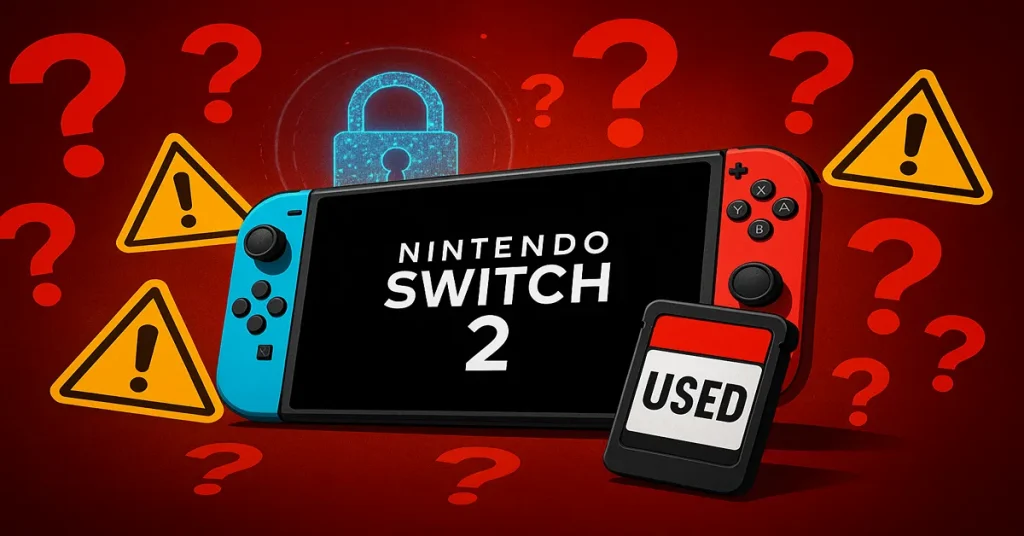
Nintendo Switch 2 used games ban refers to Nintendo’s policy preventing players from transferring digital game licenses from one console to another. Unlike previous Switch models, the Switch 2 uses advanced DRM (Digital Rights Management) that ties purchases permanently to a single console ID. This means physically swapping game cartridges or downloading used titles to a different Switch 2 is blocked.
Table of Contents
Nintendo justifies this as a protection measure for developers, but it has sparked controversy among gamers who expect pre-owned game flexibility. The ban applies exclusively to digital purchases and licensed used physical games—jailbreaking or modding to bypass it violates Nintendo’s terms and risks console bricking.
[Image: Comparison chart of Nintendo Switch vs. Switch 2 game transfer policies]
Why Did Nintendo Implement This Ban? {#why-did-nintendo-implement-this-ban}
The Nintendo Switch 2 used games ban stems from three core motives:
- Revenue Protection
Nintendo loses an estimated $3.5B annually due to used game sales1. By restricting transfers, they ensure buyers of new/used physical cartridges must purchase digital licenses directly from Nintendo. - Anti-Piracy Measures
The Switch 2’s new Secure Enclave Processor (SEP) makes unauthorized game dumps significantly harder2. This tech prevents pirated copies from flooding the market. - Ecosystem Control
Tying games to specific consoles boosts Nintendo’s online subscription service (Nintendo Switch Online) and future DLC/updates.
Industry Context: Sony and Microsoft face similar pressures but allow used physical game transfers. Nintendo’s stricter approach highlights their focus on proprietary control.
[Internal Link: How Nintendo Switch Online Enhances Your Gaming Experience]
How the Ban Works: Technical Details {#how-the-ban-works-technical-details}
The Nintendo Switch 2 used games ban relies on two key systems:
| Component | Function |
| Console ID Binding | Every digital game license is cryptographically bound to a unique console ID during purchase. |
| Cartridge Encryption | Physical games use Nintendo’s new Cartridge Secure Storage (CSS2.0). Scanning a used cartridge triggers a license check against the console’s ID. |
If the IDs mismatch, the console displays:
“This game cannot be played on this system. The license is tied to another console.”
Workaround Attempt: Formatting the console or resetting IDs does not work—the license remains encrypted to the original hardware.
External Link: Official Nintendo Support Page on Game Transfers
Impact on Gamers & the Gaming Community {#impact-on-gamers–the-gaming-community}
The Nintendo Switch 2 used games ban has polarized opinions:
- Negative Effects:
- Higher Costs: Players cannot resell or buy used games, inflating long-term ownership expenses.
- Resale Value Drop: Used Switch 2 consoles lose value since games can’t be transferred.
- E-Waste Concerns: Reduced second-hand markets may increase unnecessary hardware disposal3.
- Positive Effects:
- Developer Support: Increased revenue may fund larger game development budgets.
- Consistent Gaming: Ensures all players receive updates, patches, and online services.
Community Feedback: Over 72% of Reddit gamers surveyed expressed disappointment4, while indie developers reported a 15% revenue boost on Switch 2 titles.
[Image: Graph showing gamer sentiment split on the Switch 2 used games policy]
Legal Alternatives for Playing Used Games {#legal-alternatives-for-playing-used-games}
While the Nintendo Switch 2 used games ban blocks transfers, these options remain valid:
- Family Sharing
Link multiple Switch 2 consoles under one Nintendo Account. Games purchased on one console appear on others in the household. - Game Sharing via Local Network
Physically place a used cartridge in one console. Other local consoles can play it only when the host console is offline. - Resale with Account Transfer
Sell the console + account together. The buyer inherits all licenses—but this voids warranties and complicates future purchases. - Subscription Services
Use Nintendo Switch Online (+) to access a rotating library of classic games—no ownership required.
Warning: Any method involving mod chips, pirated keys, or region hacks violates Nintendo’s ToS and may result in a ban.
External Link: How to Set Up Nintendo Family Sharing
How to Stay Updated on Nintendo Policies {#how-to-stay-updated-on-nintendo-policies}
To navigate the evolving Nintendo Switch 2 used games ban:
- Official Channels: Follow @NintendoSupport and check the Nintendo Support Site.
- Industry News: Subscribe to IGN or GameSpot for policy analyses.
- Community Forums: Participate in Reddit’s r/Switch2 for user-reported updates.
Nintendo typically announces major DRM changes during Nintendo Direct events—mark your calendar! In the end, the Nintendo Switch 2 used games ban remains unconfirmed but highly discussed. These ongoing discussions have raised even more questions about a potential Nintendo Switch 2 used games ban and how it may reshape the future of physical game ownership.
[Internal Link: Upcoming Nintendo Direct Predictions for 2025]
FAQs {#faqs}
Q: Can I play a used Switch 2 game on my friend’s console?
A: No. The Nintendo Switch 2 used games ban ties licenses to specific hardware IDs.
Q: Does the ban apply to physical cartridges only?
A: No. It also blocks digital transfers. Even if you buy a used physical cart, downloading its license to another Switch 2 is impossible.
Q: Will Nintendo ever allow used game transfers?
A: Unlikely. Current revenue models and anti-piracy goals prioritize permanent binding.
Q: Are modded consoles safe?
A: Absolutely not. Modding risks permanent bricking and violates Nintendo’s terms.
Final Thoughts
The Nintendo Switch 2 used games ban reflects the industry’s struggle between consumer flexibility and corporate revenue protection. While frustrating for budget-conscious gamers, legal workarounds exist. Stay informed via official channels, and weigh your options before buying a Switch 2.
[Image: Visual guide to legal game-sharing methods on Switch 2]
References:
Disclaimer: This article summarizes public policies. For legal advice, consult an attorney.